An injection site reaction (ISR) is a localized inflammation that occurs at the site where you receive your injection. These reactions are common with anti-obesity medications like semaglutide (Wegovy, Ozempic), tirzepatide (Zepbound, Mounjaro) and Saxenda (Liraglutide).
Common Symptoms
Injection site reactions may include:
Redness or erythema at the injection site
Swelling or induration (hardness)
Pain or tenderness
Itching or pruritus
Warmth at the site
Bruising (less common)
Burning sensation (occurs in about 0.2% of patients)
Small nodules or lumps (rare, but reported with GLP-1 medications)
How Serious Are These Reactions?
Most injection site reactions are mild and resolve on their own within a few days. Clinical trials show that approximately 1.4% of patients taking semaglutide (Wegovy) experience injection site reactions, compared to 1.0% taking placebo.
However, in some cases, reactions can be more severe and require medical attention. If you experience spreading redness, severe pain, fever, or signs of allergic reaction, contact your healthcare provider immediately.
Risk Factors
Factors that may increase your risk of injection site reactions:
History of allergies or hypersensitivity reactions
Sensitivity to the medication or its ingredients
Improper injection technique (wrong angle, depth, or speed)
Not rotating injection sites
Sensitive skin
Injecting when skin is not completely dry after using alcohol swabs
Treatment for Mild Reactions
Home remedies that can help relieve symptoms:
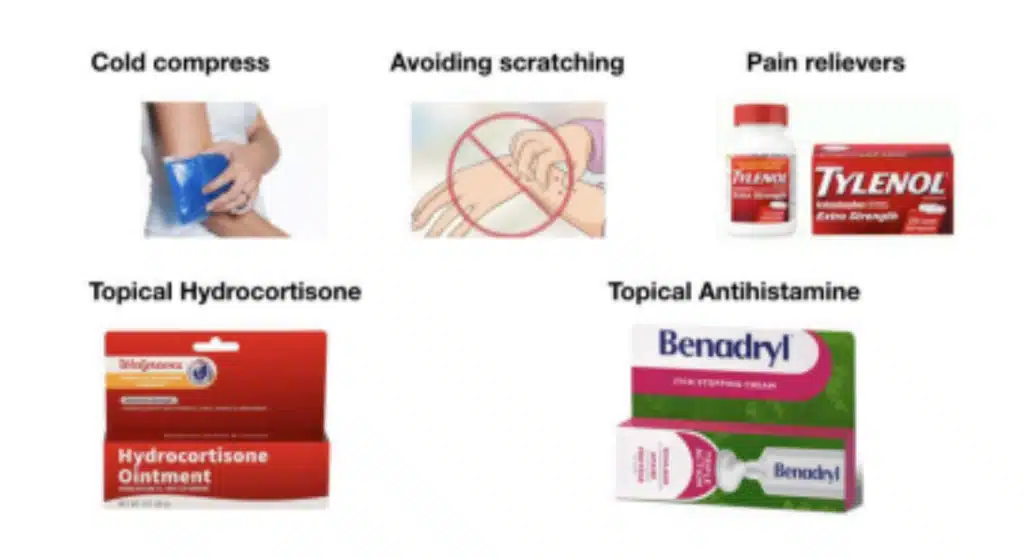
Cold compress: Apply a cool, damp cloth to reduce swelling and discomfort
Avoid scratching: Do not scratch or rub the area, as this can worsen irritation or cause infection
Pain relievers: Over-the-counter medications like acetaminophen (Tylenol) can help with discomfort
Topical hydrocortisone: Apply a thin layer to reduce inflammation
Topical antihistamines: Products like Benadryl cream can help with itching
Oral antihistamine: Oral antihistamine like cetirazine, loratadine or diphenhydramine may also be used
Gentle skin care: Use mild, unscented products on the affected area
Prevention Strategies
Before Injection
Inform your healthcare provider about any allergies before starting medication
Wash your hands thoroughly with soap and water for at least 20 seconds
Clean the injection site with an alcohol swab using a circular motion
Let skin dry completely after using alcohol swab (at least 30 seconds) to prevent burning and irritation
Use room temperature medication opposed to cold medication as this may help prevent reactions. You can take your medication out of the fridge 30 minutes prior to injection time.
During Injection
Read the instructions for use that come with your medication.
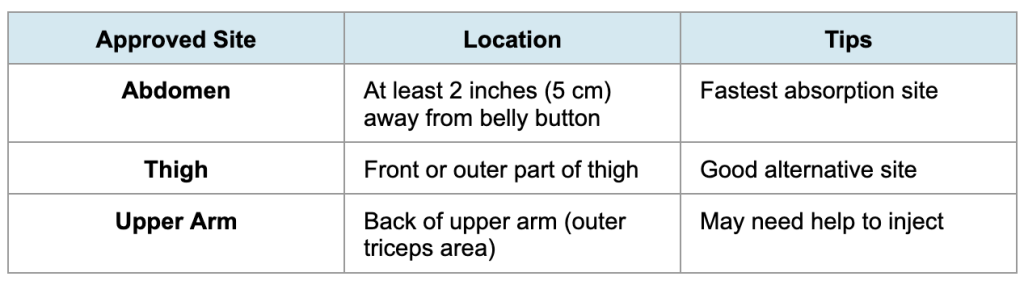
Choose and Rotate Your Injection Sites
Your healthcare provider can help you choose the injection site that is best for you.
You or another person can inject the medication in your stomach or thigh.
Another person should give you the injection in the back of the upper arm.
Change (rotate) your injection site with each weekly or daily injection (depending on your medication.) Do not use the same site for each injection.
Rotation tip: Rotate within the same area (e.g., different spots on your abdomen) before switching to a different body area. Wait at least 1 week before reusing the same injection spot.
When to Contact Your Healthcare Provider
Seek medical attention if you experience:
Severe pain at the injection site
Spreading redness or red streaks extending from the injection site
Fever (temperature above 100.4°F or 38°C)
Pus or drainage from the injection site
Persistent nodule or lump that doesn’t resolve after several weeks
Reactions that do not improve with home care after 3-5 days
CALL 911 or seek emergency care immediately if you have signs of a serious allergic reaction:
Hives or widespread rash
Swelling of face, lips, tongue, or throat
Difficulty breathing or shortness of breath
Dizziness or rapid heartbeat
Rare Complications
In rare cases, untreated or severe injection site reactions can lead to:
Infection at the injection site
Abscess formation (collection of pus)
Tissue damage from repeated injections in the same spot
Lipohypertrophy (thickening of fatty tissue) from improper site rotation
Summary
Injection site reactions are common with anti-obesity medications like semaglutide and tirzepatide. Most reactions are mild and resolve quickly with proper care. Following good injection technique, rotating sites systematically, and monitoring for any concerning symptoms will help minimize these reactions. Always contact your healthcare provider if you have questions or concerns about your medication.
References & Resources
This information is based on:
FDA prescribing information for Wegovy (semaglutide) and Zepbound (tirzepatide)
CDC guidelines for safe injection practices
Clinical trial data and peer-reviewed medical literature
For more information, talk to your healthcare provider or pharmacist.